
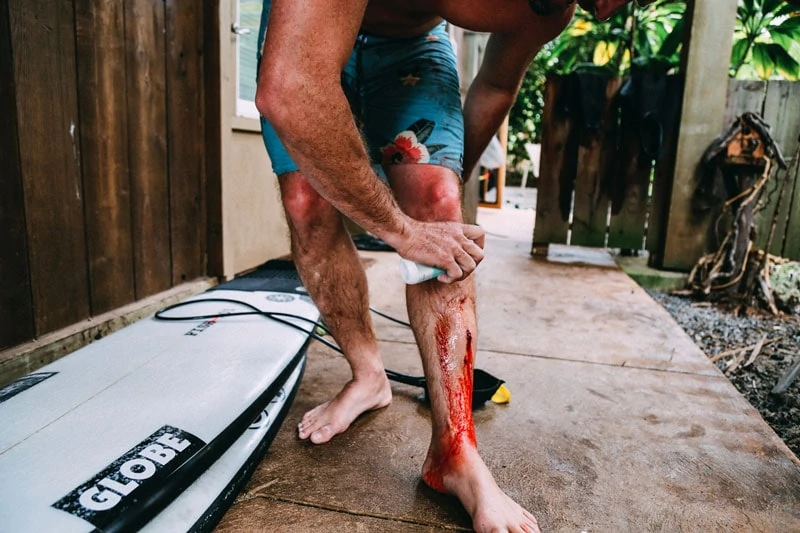
Coral & Reef Cuts
Surfing First Aid
Surfing the beautiful reef breaks in Weligama, Midigama, and Ahangama is an incredible experience. But as any surfer knows, the ocean reef can be unforgiving. A minor slip or a wipeout can instantly result in a coral cut or scrape.
In a warm, tropical climate like Sri Lanka, even a tiny scratch from live coral can introduce marine bacteria deep into your skin, leading to severe infections within 24 to 48 hours. Here is how to treat reef cuts immediately to stay safe and get back into the water quickly.
Immediate First Aid for Reef Cuts
- Rinse Thoroughly with Fresh Water: As soon as you get out of the ocean, flush the wound with clean, running fresh water. This helps force out tiny sand particles, coral dust, and marine organisms trapped inside the cut.
- Scrub Gently with Soap: Use a clean cloth or gauze with mild soap and fresh water to gently clean the scrape. Coral cuts can contain microscopic living organisms; washing thoroughly is essential to kill off surface bacteria.
- Apply an Antiseptic: Once dried, apply a thin layer of antiseptic cream or iodine solution to protect the wound, and cover it with a breathable waterproof dressing.
- Keep it Dry: Avoid going back into the ocean until the cut has closed or formed a solid, dry scab. Introducing open wounds to tropical sea water repeatedly is the primary cause of severe skin infections.
Signs of a Tropical Infection
Keep a very close eye on the cut over the next few days. You should seek professional medical attention immediately if you notice:
- The skin around the cut becomes increasingly red, swollen, or hot to the touch.
- The pain gets worse instead of better after 24 hours.
- Yellowish fluid or pus starts oozing from the wound.
- You develop a mild fever or feel chills.